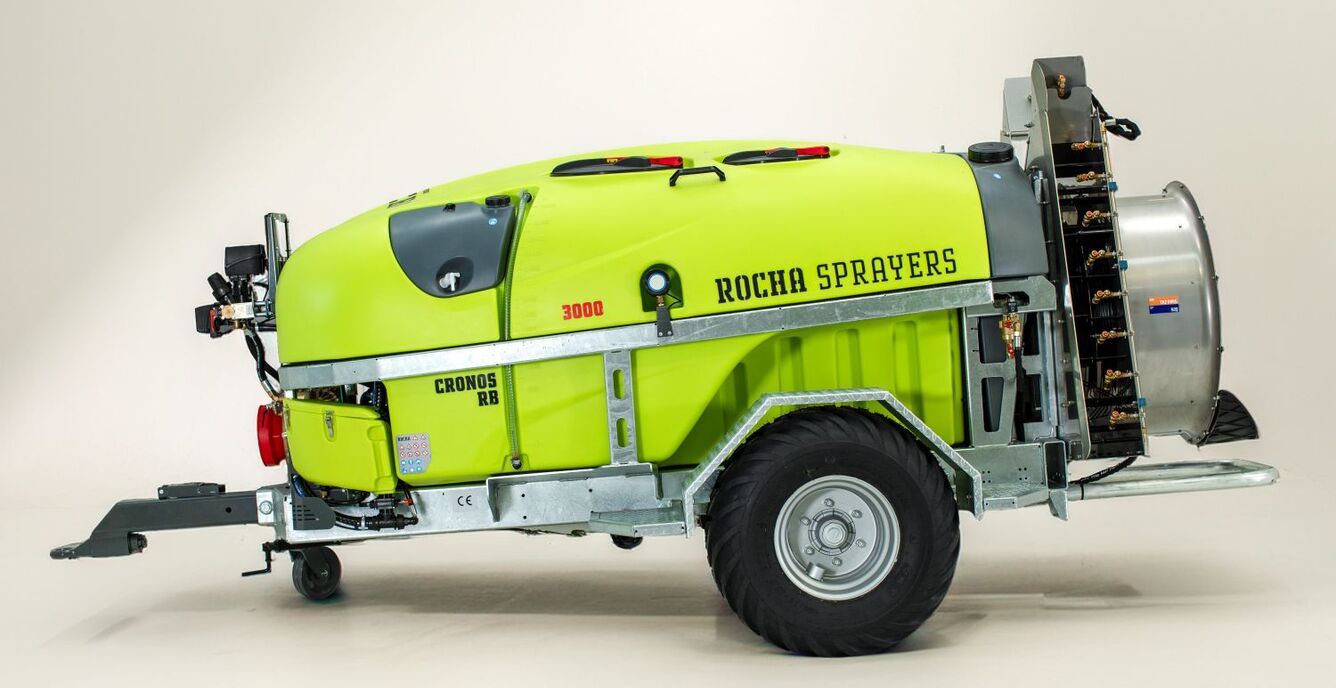
The use of agricultural equipment involves certain procedures not only during operation but also in inspection, maintenance, and storage. These actions must be carried out rigorously, as they directly affect performance, material durability, and the safety of operators, crops, and the environment.
The service life of the equipment is directly related to immediate cleaning after use, regular calibration, inspection of parts, and storage in a safe, dry, ventilated place away from chemicals. Cleaning removes corrosive residues and ensures the effectiveness of the next application, while preventive maintenance prolongs the equipment’s lifespan and guarantees safety, as well as being a prerequisite for the manufacturer’s warranty terms.
User manuals provide guidance on maintenance tasks and the defined intervals.
MAINTENANCE
Daily cleaning: Wash the equipment immediately after each use with clean water or an appropriate cleaning product.
Inspection: Carry out regular inspections and any necessary adjustments at the end of each working day. When putting the equipment into operation, after the first 10 hours and every 50 hours of work, inspect the hydraulic components. Oil levels of pumps and transmission boxes should be checked daily. For components in direct contact with products, whether pesticides or fertilisers, liquid or solid, pay special attention to noise, foreign objects, play, damage or leaks, and replace or repair whenever necessary. Metal structures, fastening elements (nuts and bolts), tractor hitch components (eyes and pins), piping and water and/or oil accessories, and power transmission systems (cardans) should be checked at least weekly.
Calibration: Calibrate equipment at the start of the season, whenever changing components or products to be applied, and after any maintenance. Periodic inspections during the season are also recommended.
Lubrication: Follow lubrication recommendations to ensure proper functioning. Daily lubricate Grease points (Grasser) and every 100 hours lubricate sliding rails, bearings, and joints.

WINTER STORAGE
At the end of the season and before storing the equipment, certain aspects must be considered to prolong the equipment’s service life. Residues from chemicals can seriously damage certain components.
To keep equipment, especially sprayers, operational and components intact, we suggest the following procedure:
Completely clean the equipment, inside and out;
Replace any damaged seals and repair any leaks;
Completely drain clean water from tanks, water circuit, nozzles, etc.;
In the main tank, add approximately 50 litres of antifreeze, made up of 1/3 automotive antifreeze and 2/3 clean water;
Run the liquid through the entire water circuit until it comes out of the spray nozzles. The antifreeze also prevents O-rings, seals, membranes, etc., from drying out;
Lubricate all lubrication points regardless of recommended intervals;
Once the sprayer is dry, remove rust from any scratches or paint damage and touch up the paint;
Apply a thin layer of anti-corrosion oil to all metal parts. Avoid applying oil to rubber parts, hoses, and tyres;
Store electronic devices dry and clean in an environment without condensation;
Clean quick-coupling valves of the oil-hydraulic circuit and put protective caps to prevent dust;
Apply grease to all hydraulic cylinder rods that are not fully retracted to protect against corrosion;
Apply protective liquid to tyres to prevent rubber from drying;
Store equipment in a dry, ventilated place and, if possible, cover it to protect from dust and moisture;

POST-WINTER STORAGE
Remove the cover;
Adjust tyre pressure;
Clean grease or lubricating oil applied to metal surfaces;
Connect the equipment and control devices to the tractor;
Check all electrical and hydraulic functions;
Empty any antifreeze still in the tank and circuit;
Clean the entire circuit with clean water;
ADDITIONAL CARE
Always use appropriate Personal Protective Equipment (PPE), such as gloves, mask, and safety glasses, during use and cleaning to avoid contact with chemicals.
Dispose of washing water in appropriate locations, avoiding watercourses, wells, or collection areas.
Use only manufacturer’s original replacement parts and accessories to avoid damage and ensure safety.