News
A new approach to chestnut grove protection

The transition towards more sustainable, precise and technologically advanced agriculture requires solutions adapted to the characteristics of each crop. In the case of chestnut trees, where tree size and canopy density present particular challenges, crop protection application technology is playing an increasingly important role.
The chestnut sector in Portugal, the Iberian Peninsula and Europe is currently facing the challenge of modernising crop protection processes, seeking to ensure farm profitability, optimise the use of resources, respond to new crop protection challenges and, at the same time, reduce environmental impact.
It is in this context that technological innovation can make a difference.
Chestnut production in Europe and the Iberian Peninsula
Chestnut production (Castanea sativa) plays an important economic, social and environmental role in the mountainous regions of southern Europe, particularly in Portugal and Spain.
The chestnut tree is a species of high economic and ecological value. Historically associated with the subsistence of rural communities, particularly in mountainous regions, it has evolved into a crop of commercial importance, driven by demand for high-quality chestnuts and by the various processing markets.
In Europe, production is mainly concentrated in Mediterranean and Atlantic-influenced regions. Italy has historically held a prominent position, both in production and industrial processing, while Spain has significant production areas in Galicia, Castile and León, Asturias and Andalusia.
Portugal, Spain and Italy are among the leading European producers, while countries such as France and Greece also maintain a significant presence in the sector. In France, for example, a significant proportion of production is directed towards higher value-added products.
In the Iberian Peninsula, there is a strong connection between the different producing regions. Soil and climatic conditions, commercial networks and processing infrastructure create opportunities, but also mean that many of the challenges are shared, particularly in terms of crop protection.
Among the main problems affecting European chestnut orchards are ink disease (Phytophthora cinnamomi), chestnut blight (Cryphonectria parasitica) and the chestnut gall wasp (Dryocosmus kuriphilus).
These challenges are compounded by the effects of climate change, with prolonged periods of drought and high temperatures during critical stages of fruit development and filling, which can compromise the productivity and longevity of chestnut orchards.
The Chestnut Sector in Portugal
Portugal holds a prominent position in European chestnut production, with production strongly concentrated in the inland regions of the North and Centre.
Trás-os-Montes is particularly important, with producing areas such as Serra da Padrela, Valpaços, Vinhais and Bragança. Beira Interior and Serra de São Mamede complement the national production area.
Portuguese chestnuts are recognised for their quality and sensory characteristics, with varieties such as Judia and Longal standing out and having a significant presence in both national and international markets.
A significant proportion of production is destined for fresh exports, particularly to markets such as France, Italy, Brazil and Spain, while another share goes to the processing industry, including frozen products and derivatives.
Against this backdrop, ensuring effective protection of chestnut trees is essential to preserve production potential and quality.
Tree Architecture:
Mature chestnut trees have a large stature and dense, voluminous canopies. The modernisation of chestnut groves inevitably requires the adoption of crop protection application technologies that reduce drift, minimise chemical product waste and effectively reach the top of the canopy with exemplary performance.
Growing Conditions:
It prefers temperate and humid climates, tolerating harsh winters but suffering from late frosts. It develops best in deep, cool, well-drained and acidic soils (such as those derived from granite and schist). Due to climate change, the sector is increasingly investing in irrigation and moisture monitoring to ensure productivity and prevent trees from drying out.
The Technological Parallel:
As we have already highlighted in previous articles, the future of the production sector depends on the development of equipment rigorously adapted to the actual needs of the terrain. In this crop, where trees reach considerable heights, application rate precision and air force/direction are decisive factors between treatment success and ineffectiveness.

Polimaster NVS DC HT Sprayers: High-Performance Engineering
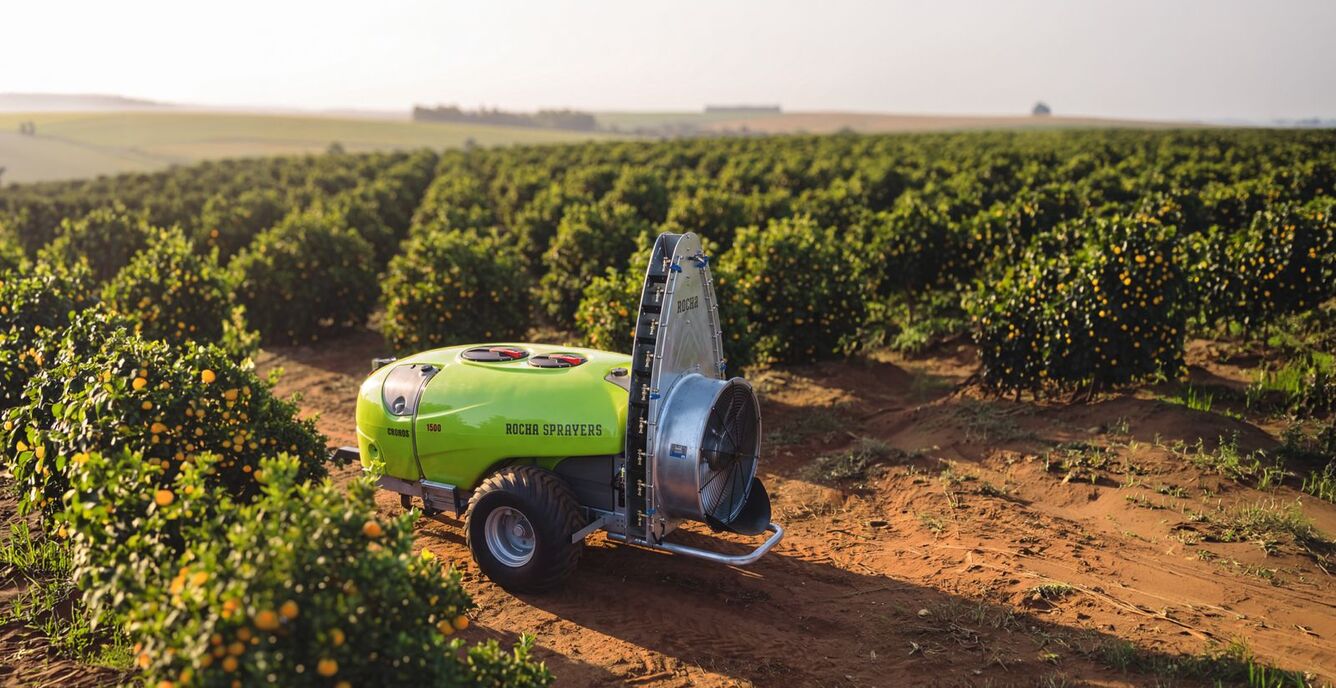
To meet the demands of treatments in more challenging chestnut groves and in large trees with dense canopies, Pulverizadores Rocha developed the Polimaster NVS DC HT range.
The equipment acronym reflects the focus of its design:
NVS: high performance with high efficiency.
NVS technology enables the Ø 1060 mm turbine to achieve air flow rates that can exceed 108,500 m³/h, while maintaining low tractor power absorption (from 75 HP) and low operating noise levels (≃ 95 DB).
DC: Dual Jet Channel
Designed to increase flow rates and provide greater flexibility in the distribution and direction of the airflow, while maintaining the appropriate operating pressure to prevent the formation of excessively large droplets, which can promote run-off and reduce retention efficiency on the surface, as well as excessively small droplets, which are more susceptible to wind drift and evaporation.
HT: High-Height Air Columns
The geometry of the air columns was designed for treatments at heights exceeding 20 m and inter-row widths of up to approximately 15 m, reaching the highest points of the canopy with direct impact and full coverage.

Precision Agriculture:
The technological evolution of Rocha sprayers now makes it possible to integrate Agriculture 4.0 solutions that significantly increase application efficiency.
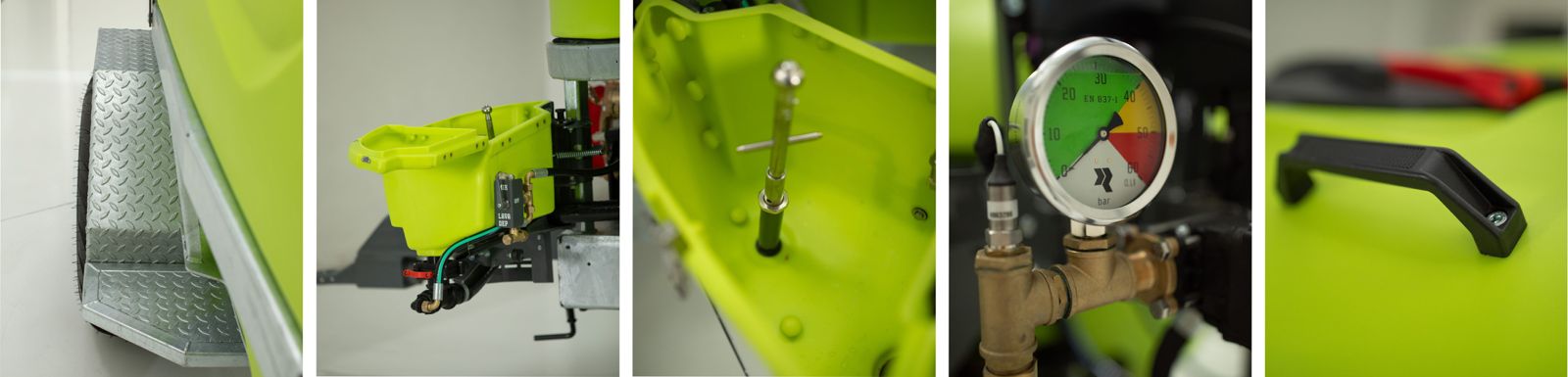
The Bravo 180S and Bravo 350S electronic controllers stand out as solutions capable of automatically adjusting circuit pressure according to forward speed, making it possible to maintain a constant application rate per hectare.
This functionality contributes to greater application uniformity and reduces the risk of over- or under-dosing.
The VRT technology (Variable Rate Application) allows different quantities to be applied in real time, based on soil or crop variability. This technology can be used when the sprayers are equipped with ISOBUS or Waatic systems.

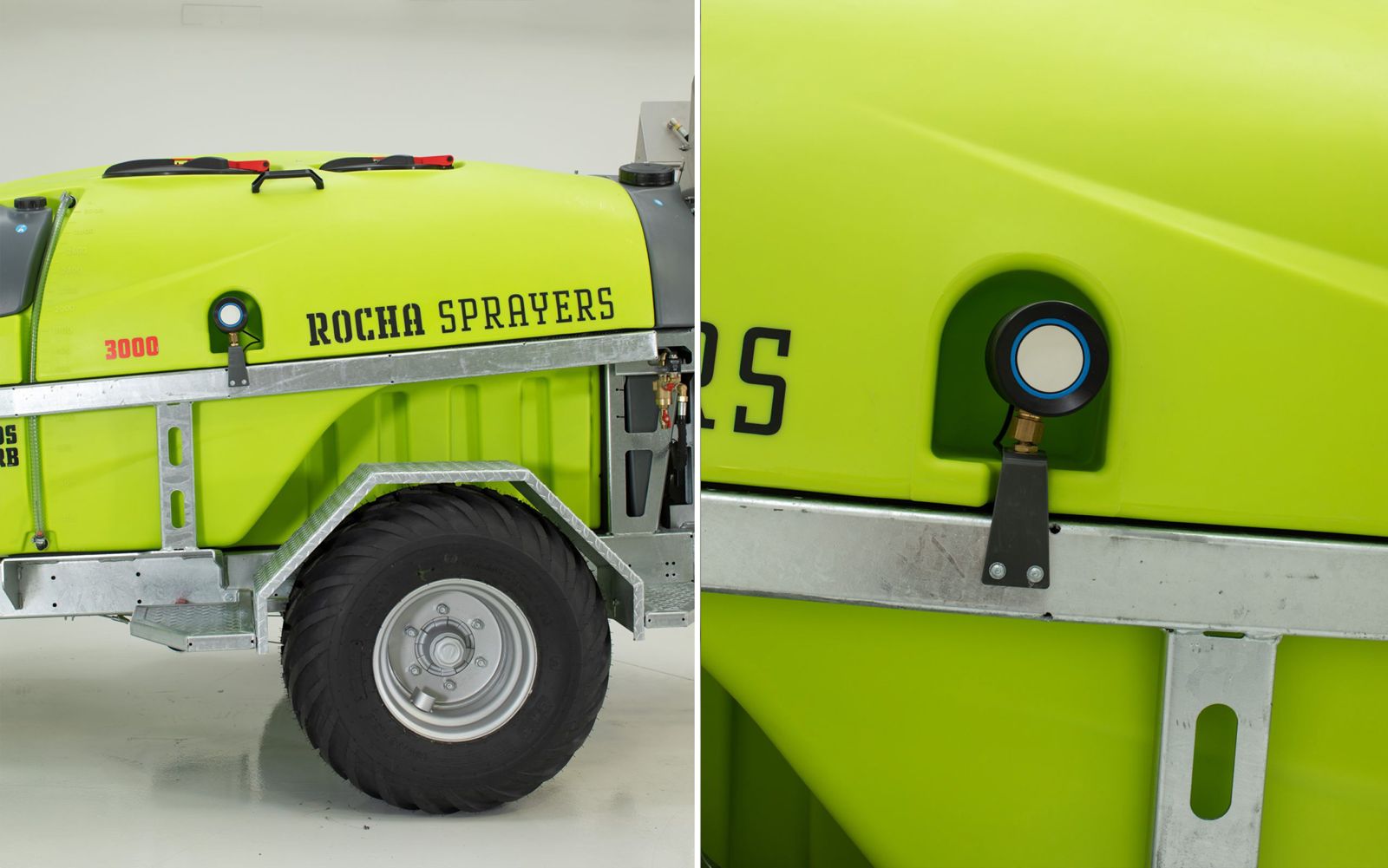
Ultrasonic sensors – Sonar are used in low-density crops and wide planting spacings, as well as in rows with gaps or at headlands. These sensors detect the presence or absence of vegetation and automatically control the opening or closing of the sections. Spraying is therefore carried out only when trunks or canopies are detected, reducing product waste and environmental impact.
Type and capacities:
Trailed sprayers with capacities of 2000L, 3000L and 4000L, allowing them to meet the needs of different types of agricultural holdings, adapting to the size of the holding and the desired working autonomy, reducing the number of trips to the filling point and stops for refilling, while increasing daily productivity.
The extras that make the difference:
In addition to these equipment combinations, which can make these sprayers the right choice, there are many other optional features that can make a difference.
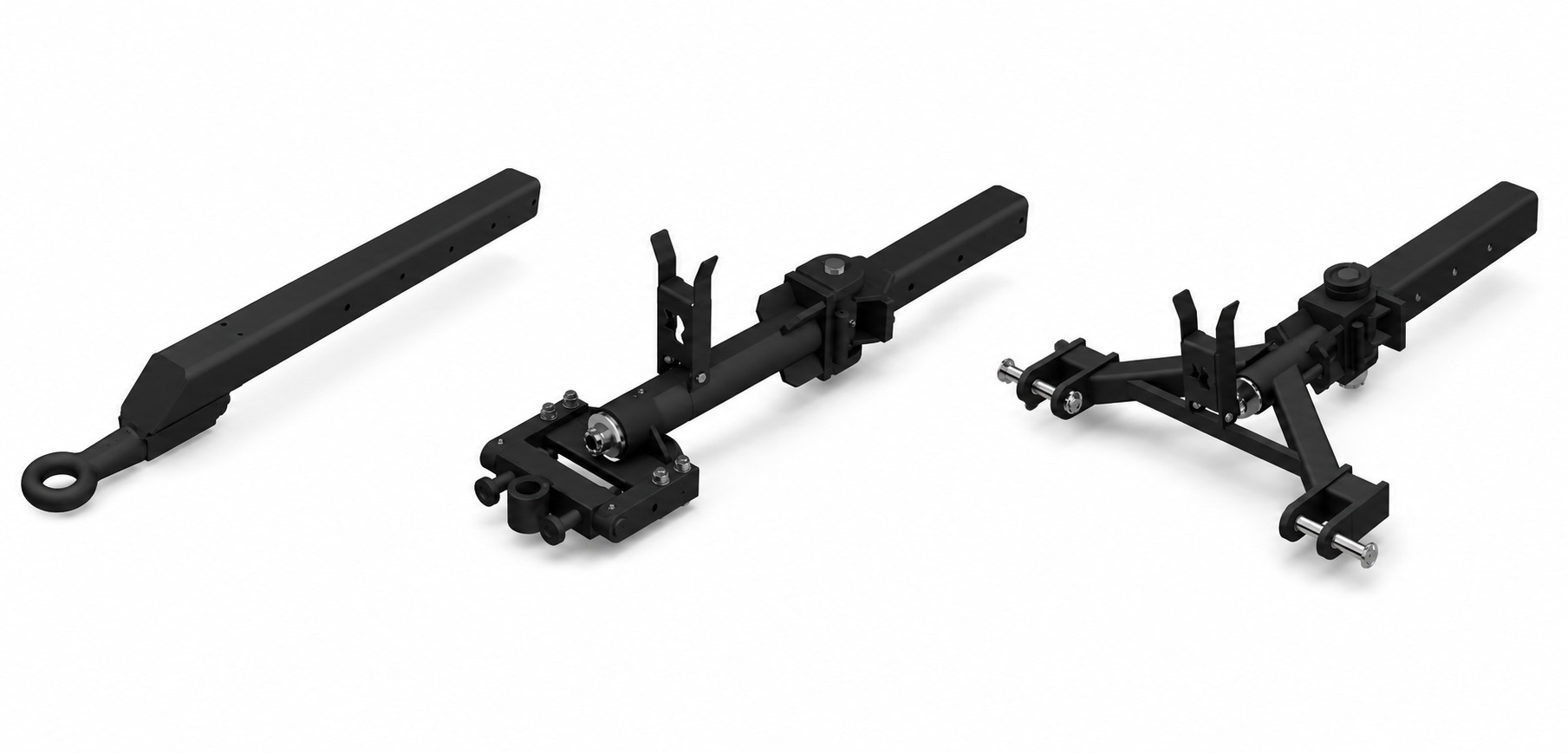
Rotating drawbars for attachment to the lower links or to the hitch, as an alternative to the standard fixed drawbar, facilitate turns at headlands, allowing the turning radius to be reduced where headlands are short.
400/60R15.3 wheels with traction tread increase stability, reduce compaction and facilitate traction, even on wetter terrain.
The widening kit and hydraulic braking system increase stability and safety on steeper terrain or when using lower-capacity tractors.
Auxiliary systems for preparing the spray mixture, such as the pre-mixer kit – an excellent and convenient aid that allows the spray mixture to be prepared before it is added to the main tank – and double agitator or more advanced agitator systems (Euromix), which ensure the homogeneity of the spray mixture is maintained in order to prevent product settling.
Advantages of Choosing the Right Sprayer:
The choice of a sprayer should take into account not only tank capacity, but also the characteristics of the crop, tree size, terrain type and actual working conditions.
In a chestnut grove with large trees, a correctly sized solution can provide significant advantages:
Superior Canopy Penetration: The turbine directs air with sufficient force and direction to penetrate the dense foliage of the chestnut tree, reaching the underside of the leaves and the burrs.
Significant Drift Reduction: NVS technology and anti-drift nozzles ensure that microdroplets reach the biological target instead of dispersing into the atmosphere.
Sustainability and Spray Mixture Savings: Optimised airflow makes it possible to reduce the volume of water and product applied per hectare, in line with European directives on pesticide reduction (Farm to Fork Strategy).
Durability in Demanding Terrain: Designed to withstand demanding topography while ensuring a long service life and simplified maintenance.

Conclusion
The consolidation of the Iberian Peninsula as a leading producer in the European chestnut market depends directly on producers’ ability to adopt cutting-edge technologies. The Rocha Polimaster NVS DC HT sprayer exemplifies the Portuguese brand’s commitment to delivering innovation, efficiency and sustainability to modern agriculture, providing the tools needed to protect crops and maximise investment returns.
For further technical details and specifications, please visit: https://www.pulverocha.pt/en/rocha-polimaster-nvs-dc . and the Rocha technical sales team, who are available to assist with configuring the sprayers that best suit the specific conditions for which they are intended.